

In Loving Memory of Luna — The Golden Retriever Who Never Left
Two years ago, a woman walked into our studio with a folder of photographs and a quiet question: “Can you make something that looks like her?”
Her name was Luna. She was a seven-year-old Golden Retriever who had been diagnosed with lymphoma. Her family knew their time together was short. They didn’t want a statue — they wanted something that could sit on the windowsill and watch the street, the way Luna used to do every afternoon.
We sat with her family for an afternoon, flipping through a hundred photos. Luna as a puppy, covered in mud at the beach. Luna stealing socks from the laundry basket. Luna lying on her back, paws in the air, snoring so loud the neighbors could hear. We listened more than we spoke, and by the end of the afternoon, we felt like we knew her too.
The thing about Luna was that she was never just a dog. She was the family’s emotional center — the one who greeted every visitor like a long-lost friend, who sat with the kids when they were sad, who herded the cats around the house like they were her own personal flock.
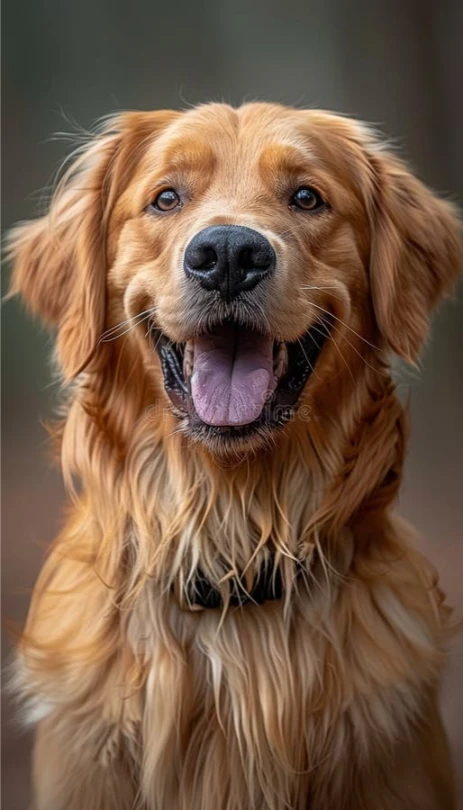
Her mom told us about the morning ritual. Every day at 6:30, Luna would nudge her awake with her cold nose, then lead her to the kitchen where she’d sit by her food bowl, tail thumping against the cabinet. She was a professional beggar — she could hold a stare for ten minutes without blinking, and she never gave up. If you ate anything in the same room as her, you were expected to share. It was the law of the house, and Luna was the sheriff.
She was also a professional coward. The vacuum cleaner terrified her. The mail carrier terrified her. The neighbor’s cat, which was half her size, terrified her. She would bark at all of them from the safety of the doorway, then run and hide under the coffee table the moment someone moved. Her family said it was the most ridiculous thing — a seventy-pound dog who was afraid of a ten-pound cat.
When we asked what they wanted to remember most, they didn’t hesitate. “That smile she gets,” they said. “When she sees you come home. Her whole body wiggles, her tail goes a mile a minute, and she makes this little huffing sound. That’s Luna.”
That single phrase became our brief. Our 3D artist built a digital model from their photos — the angle of her head, the set of her jaw, the way her ears flopped forward. We studied the way her smile pulled up on the left side, the slight asymmetry in her eyes, the way her tongue stuck out just a little when she was really happy.
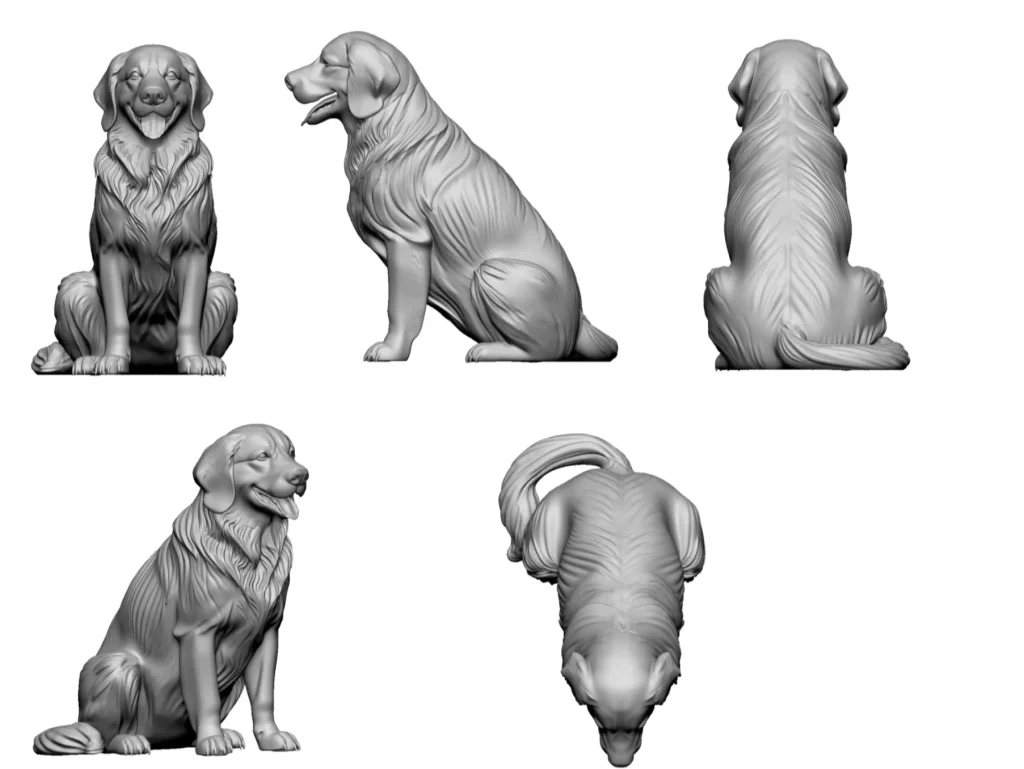
We sent it back after every revision: chest too narrow, tail held too high, eyes not quite right. After four rounds, they wrote: “This is her. You got the smile.”
The approved model was 3D-printed into a lightweight core, then overlaid with a fiberglass shell, sanded smooth until it felt like clay.
Many families ask for a resting sculpture, eyes closed, peaceful. But Luna’s family chose the opposite — alert, smiling, on duty.
“We don’t want to remember her sick,” they said. “We want to remember her greeting us at the door. We want to remember that smile, not the IV line.”
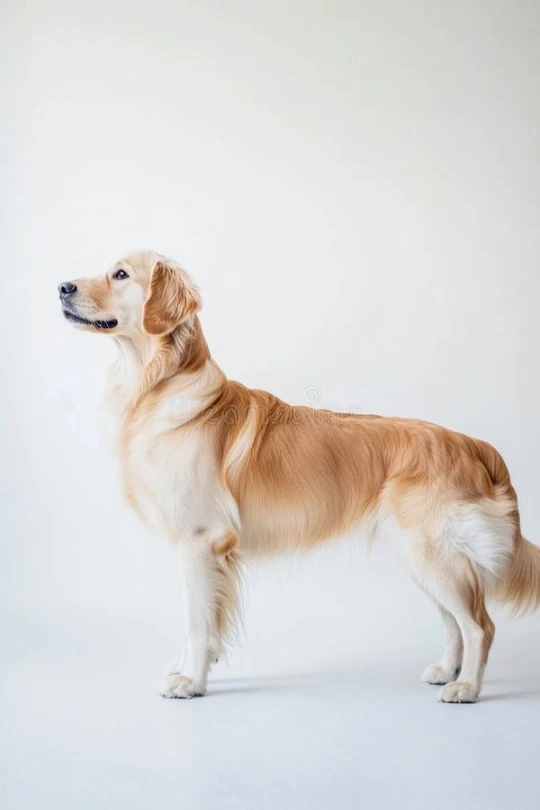
It’s a choice we honor every time. A memorial isn’t only about goodbye. It’s about keeping the version of them that made you laugh, that made you roll your eyes, that made you come home every day. We don’t want to freeze a moment of pain. We want to freeze a moment of joy.
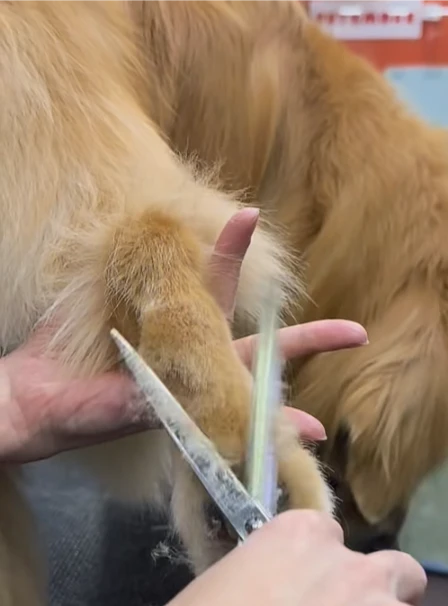
Once the hard form was approved, the real work began. Every strand of her golden coat was applied by hand, one at a time, following the growth direction we’d studied in their photos — the slightly darker fur on her ears, the lighter patch on her chest, the white tip on her tail that she’d gotten from rolling in something she shouldn’t have at the park.
Her eyes are hand-painted glass. We layered them three times: the base amber, the dark pupil, and the tiny white highlight that catches light differently depending on where you stand. When you walk around her, she seems to follow you with her eyes. When her family came back to see her, they cried. Not because it was sad. Because it was her — exactly her.
We packed her gently in a custom wooden crate, wrapped in acid-free tissue, and sent her on the road home.
They wrote to us at 11 PM that night, from their living room. She was on the windowsill, they said, watching the street. The light through her fur looked just like sunset. The kids went and stood by her and talked to her for a while, the way they used to.
That’s why we do this. Not to make statues. To bring back the one who made your days brighter, so you can keep opening the door and seeing them there.
Share your story with us
We'd love to hear about the companion who made your days brighter. Stories that move us will receive a small gift as a thank-you.